“If you won’t help me, you don’t love me!” How many exhausted parents have heard these familiar words? The last thing any parent wants is for their child to feel unloved or uncared for. When it comes to dealing with your child in the upside-down world of addiction, we must learn new ways of responding if we want to build a healthy relationship. This is so much easier said than done when your adult child is screaming that you don’t love them!
Many of us learned early that money or material gifts equate to love. Think back to your childhood when you received gifts at the holidays or birthdays. Didn’t you feel special and loved by the person presenting the gift? That is an expected response.
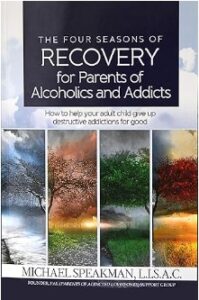
Sadly, in the world of addiction, any material item or cash can become the equivalent of substances. Parents do not want to become the means by which their child acquires substances. So, what are we to do? Thankfully, in his book, The Four Seasons of Recovery for Parents of Alcoholics and Addicts (pg. 56), Mike Speakman addresses this issue and offers several healthy options. He calls them The Big Five Ways to Show Love:
- Words of encouragement. These words can be communicated as “I love you.” “I believe in you.” “I know you’ll beat this problem.” etc. people hear disapproval twice as loud as they hear approval, so you need to redouble your efforts to show your love to your son or daughter.
- Letters are written words of encouragement. They may seem old-fashioned, but because they are seldom written these days, they often mean even more to their recipients.
- Hugs provide a physical interaction that is irreplaceable. Hugging isn’t something that just happens between parents and children under eighteen. It is a worldwide indication of affection, and adults hug all the time.
- Many people, regardless of faith, find prayer to be helpful. It is something you can do whether you are in contact with your loved one or not. At the very least, the prayers will make you feel better, but there is always the hope that your adult child will benefit from the prayers or even simply from knowing you are praying for him or her.
- Sharing a meal. You can share a meal together in your home if there is enough trust left or built, but this is a tricky situation. I work with many parents who feel an obligation to bring their adult child home for a meal, even when they’ve experienced theft in their home or other negative interactions, such as potential for violence. In these cases, it’s highly recommended that you do not meet or if you do in a public place like a restaurant.
When necessary, you can always say to your child suffering from addiction, “I will always love you, and I will always give you words of encouragement when I talk to you, write letters to you when you’re not around, give you hugs when you are around, pray for you, and take you out to a meal.
The idea is that our focus must shift to presence, effort, and emotional connection rather than on material items and money. Consistently remind yourself that giving money or other forms of financial support is not the only way to show love.
See Mike Speakman’s book, which is available here https://books.palgroup.org/ – for more on topics like this.
